
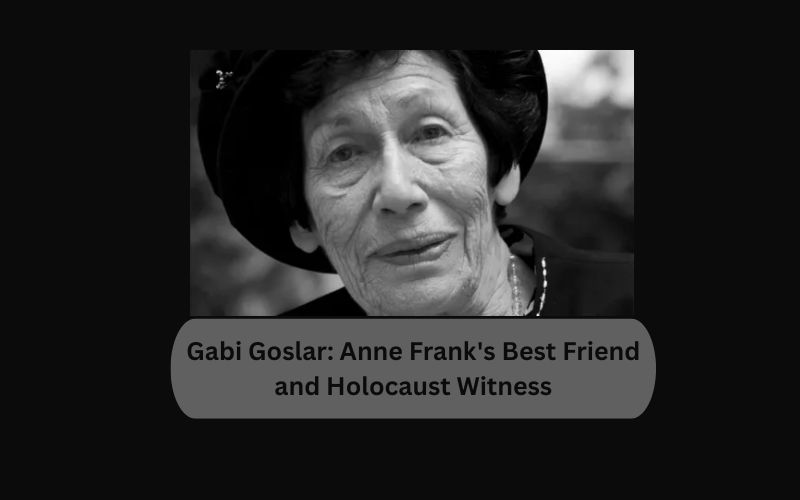
Gabi Goslar: The Lifelong Friend Who Carried Anne Frank’s Memory
Gabi Goslar was more than just another survivor. She was Anne Frank’s best friend from childhood. Their bond lasted through the darkest days of World War II.
While Anne died in Bergen-Belsen, Gabi Goslar lived to tell their story. She spent over seventy years sharing memories of the girl the world knows from the diary.
Born as Hanneli Goslar, she became a keeper of precious memories. Her words brought Anne to life beyond the pages. Gabi Goslar helped millions understand the real person behind the famous name.
A Friendship Frozen in Time
Before hiding and fear, Anne Frank was just a regular girl. She enjoyed films, talked about boys, and giggled with her closest friend. That friend was Gabi Goslar.
Their friendship shows us what the Holocaust destroyed. Normal childhood, simple joys, and innocent dreams vanished forever. Gabi Goslar remembered the Anne who laughed and loved life.
Anne called her “Lies” in the diary. She described Hanneli Goslar as one of her dearest companions. Gabi’s testimony proved that Anne’s diary told the truth about her personality and life.
Early Life and a Bond Forged in Amsterdam

Both families escaped Germany when danger grew. They sought safety in the Netherlands, hoping for better days. These similar journeys brought the girls together.
Childhood in Germany: A Foundation of Friendship
Gabi Goslar entered the world on November 12, 1928, in Berlin. Anne Frank was born seven months later. Their families knew each other even then.
The Nazi regime made life impossible for Jewish people. Jobs disappeared, friends turned away, and violence increased daily. Both families recognized they had to leave.
Fleeing meant abandoning everything familiar. However, staying meant certain danger. The Goslars and Franks chose survival over comfort.
A New Life in the Netherlands: Sisters in Exile
The Franks arrived in Amsterdam during 1933. The Goslars came one year after, settling nearby. The girls attended the same school and became inseparable.
They walked to their Montessori school together each morning. Birthday celebrations, shared secrets, and playground games filled their days. Gabi Goslar and Anne balanced each other perfectly.
Anne loved attention and drama. She expressed every feeling loudly. Meanwhile, Hanneli Goslar stayed calm, gentle, and thoughtful. Their differences made the friendship stronger.
Anne dreamed once of Hanneli wearing rags and looking starved. She woke up feeling guilty and worried. Later, this dream became real in the worst way possible.
The War Years: Separation and a Fleeting Reunion
May 1940 brought terror to their peaceful lives. The Nazi invasion changed everything overnight. Jewish families faced increasing restrictions and danger.
The Occupation and a Growing Divide
Persecution arrived slowly but steadily. Yellow stars marked Jewish people publicly. Parks, theaters, and buses became forbidden places for them.
Gabi Goslar and Anne tried keeping their friendship normal. They met wherever allowed, supporting each other through fear. Yet safety slipped further away each day.
Spring 1942 brought their final meeting on an Amsterdam street. Anne acted strangely and mentioned going to Switzerland. Hanneli Goslar felt confused and hurt by this coldness.
Years later, Gabi Goslar understood the real reason. The Franks were preparing to hide, not travel. Anne’s lie protected her family’s secret plan.
The Glimpse Through the Barbed Wire: Bergen-Belsen
The Goslars couldn’t escape deportation forever. Westerbork transit camp received them in 1943. February 1944 brought transfer to Bergen-Belsen concentration camp.
Luck placed them in a special exchange section. Their Palestine papers offered slim hope for release. This small difference kept Gabi Goslar alive longer than most.
Bergen-Belsen meant hunger, sickness, and death everywhere. Still, Gabi Goslar protected her younger sister Rachel daily. Hope seemed impossible but necessary.
Another prisoner brought shocking news one evening. Anne Frank was there, separated by barbed wire. Gabi Goslar desperately needed to reach her childhood friend.
They spoke through darkness several times. Anne was starving in the main camp area. She thought her whole family had died. Her clothes were rags against freezing temperatures.
Gabi Goslar had slightly better conditions and occasional extra food. She gathered bread, sugar, and a glove into a sock. Bravely, she threw this package over the fence.
Another starving prisoner grabbed the first package. Heartbroken, Gabi Goslar assembled another and tried again successfully. This act showed compassion during unimaginable cruelty.
Guards ended their last conversation too soon. Anne barely had strength to stand. Gabi Goslar never heard her friend’s voice again after that night.
Life After Liberation: Bearing the Unbearable
British soldiers freed Bergen-Belsen in April 1945. Gabi Goslar and her sister survived, though sick and weak. Their father died just days before freedom came.
The Devastating Truth and a New Beginning
Recovery meant searching for news about friends and family. Gabi Goslar learned the heartbreaking truth about the Franks. Someone had betrayed their hiding place to authorities.
Otto Frank alone survived from the family. Anne and Margot died from typhus in Bergen-Belsen. They died just weeks before soldiers arrived. Freedom came too late for them.
Gabi Goslar struggled with why she lived while Anne didn’t. This question drove her later work sharing their story. Guilt transformed into purpose over time.
She moved to Palestine in 1947, which became Israel soon after. Gabi Goslar trained as a nurse, helping others heal. She married Dr. Walter Pinkass, another Holocaust survivor.
They raised a family together in Jerusalem. New life grew from terrible loss. For years, Gabi Goslar stayed quiet about wartime experiences.
Becoming a Witness: The Voice for Those Who Were Silenced
Anne’s diary publication in 1947 changed everything. The book became famous worldwide. Otto Frank contacted his daughter’s old friends for their memories.
Otto Frank asked Gabi Goslar to share what she remembered. Slowly, Hanneli Goslar accepted this important role. Survival meant responsibility to those who died.
Gabi Goslar’s stories added missing pieces. She described Anne before hiding funny, energetic, and full of dreams. Her words proved the diary showed Anne’s true personality.
She connected the famous diarist to real human experience. Students everywhere could picture Anne as an actual person. This made the Holocaust feel immediate and personal.
The Legacy of Gabi Goslar: Memory Keeper
Gabi Goslar became a dedicated educator over decades. Her calm voice and clear memories touched hearts deeply. She visited schools, museums, and memorials across the world.
Her talks never promoted hatred. Instead, she warned against ignoring early signs of bigotry. Fighting discrimination through kindness became her life’s work.
Author and Speaker: Sharing Her Story
Gabi Goslar wrote a book in 1997 with a journalist’s help. “My Name is Anne, She Said, Anne Frank” preserved her memories permanently. The memoir mixed her family’s suffering with Anne’s story.
Historians value this book as a primary source. Biographer Melissa Müller used Gabi Goslar’s detailed accounts extensively. Her recollections enriched understanding of Anne’s life and character.
She spoke publicly for many decades without stopping. The Anne Frank House in Amsterdam hosted her often. Her recorded interviews now preserve her voice forever.
Holocaust education programs brought her to countless classrooms. Each talk made history real for young people. She fought forgetting with every word she spoke.
A Life of Meaning and Remembrance
Gabi Goslar spent her final years in Jerusalem fighting ignorance. Rising Holocaust denial and antisemitism alarmed her deeply. She responded by sharing her story even more.
She continued speaking into her nineties. Fewer survivors remained alive each year. Her testimony grew more valuable as living memory faded away.
Gabi Goslar died on October 28, 2022, aged 93. Her passing ended one of the last direct connections to Anne Frank. People worldwide honored her dedication to remembrance.
Her legacy lives through her book and recorded talks. She proved that resilience means turning pain into purpose. Her life showed meaningful survival inspires others.
FAQs
Who was Gabi Goslar and why is she important?
Gabi Goslar was Anne Frank’s best friend and a Holocaust survivor who shared their story with the world for over seven decades.
How did Gabi Goslar survive Bergen-Belsen?
She stayed in a special exchange section because of Palestine papers, then British troops freed the camp in April 1945 successfully.
What did Gabi Goslar do for Anne Frank at Bergen-Belsen?
Gabi Goslar threw bread and sugar over barbed wire to her starving friend during their final conversations at the camp.
Is “Lies” in Anne’s diary referring to Gabi Goslar?
Yes, “Lies” was Anne’s nickname for Hanneli Goslar, one of her closest friends mentioned many times in the diary.
What book did Gabi Goslar write about Anne Frank?
Gabi Goslar wrote “My Name is Anne, She Said, Anne Frank” in 1997, sharing memories and their beautiful friendship story.
Conclusion
Gabi Goslar’s life showed both terrible loss and incredible strength. She carried memory for seventy-seven years after surviving the Holocaust. Her friendship with Anne Frank connected history to humanity. Through constant testimony, she kept Anne real, not just famous. Gabi Goslar turned personal grief into teaching millions worldwide. Her voice ended in 2022, but her message about remembrance and hope continues inspiring people today.
Discover Gabi Goslar’s powerful story as Anne Frank’s lifelong friend, Holocaust survivor, and devoted memory keeper who shared their tale.
Read More:Natalie Viscuso Age: Everything About the 34-Year-Old Executive
